Protecting Critical Communications Infrastructure
Connected communications facilities—including telecommunications spaces, broadband networks, fiber hubs, central offices, head-ends, satellite teleports, and cellular transmission sites—form the backbone of modern business operations and daily life. These environments house sensitive, high-value technology such as servers, network equipment, cabling, and power systems that are required to operate continuously. In many cases, the data, connectivity, and services delivered through these facilities are mission-critical and irreplaceable, particularly at the last-mile, where service disruptions are immediately experienced by customers, public safety systems, and critical infrastructure.
A fire within a connected communications facility can be catastrophic—interrupting service, impacting thousands of customers simultaneously, and resulting in significant financial and operational losses. Because uptime is essential, fire protection strategies in these environments must prioritize early detection, rapid response, and non-damaging suppression, rather than reliance on minimum code compliance alone. Clean agent fire suppression systems are commonly deployed to protect electronic equipment while minimizing collateral damage and supporting rapid service restoration. These systems are typically designed and maintained in accordance with NFPA 2001, with detection, notification, and system interfaces governed by NFPA 72 and telecommunications-specific guidance provided by NFPA 76.
Like data centers, connected communications environments present unique fire protection challenges, including densely packed electronic equipment, continuous electrical loads, complex cabling pathways, and localized heat accumulation. To address these risks, advanced detection technologies such as aspirating smoke detection (ASD) are frequently employed to provide very early warning of incipient fire conditions—often before visible smoke or heat thresholds are reached. Early detection is particularly critical in unmanned, remote, or last-mile facilities, where response times may be extended and early intervention can be the difference between a minor event and a prolonged outage.
Risk is further amplified by the fact that many connected communications facilities are purpose-built exclusively to support network operations and, in some cases, may not require automatic suppression systems under local AHJ interpretation. In these scenarios, proactive fire protection—combining aspirating detection, clean agent suppression, and disciplined inspection, testing, and maintenance per NFPA 25 and NFPA 72—is essential to maintaining operational continuity, protecting critical assets, and sustaining network reliability.
Connected Communications Resources
The Broadband and Telecommunications Experience
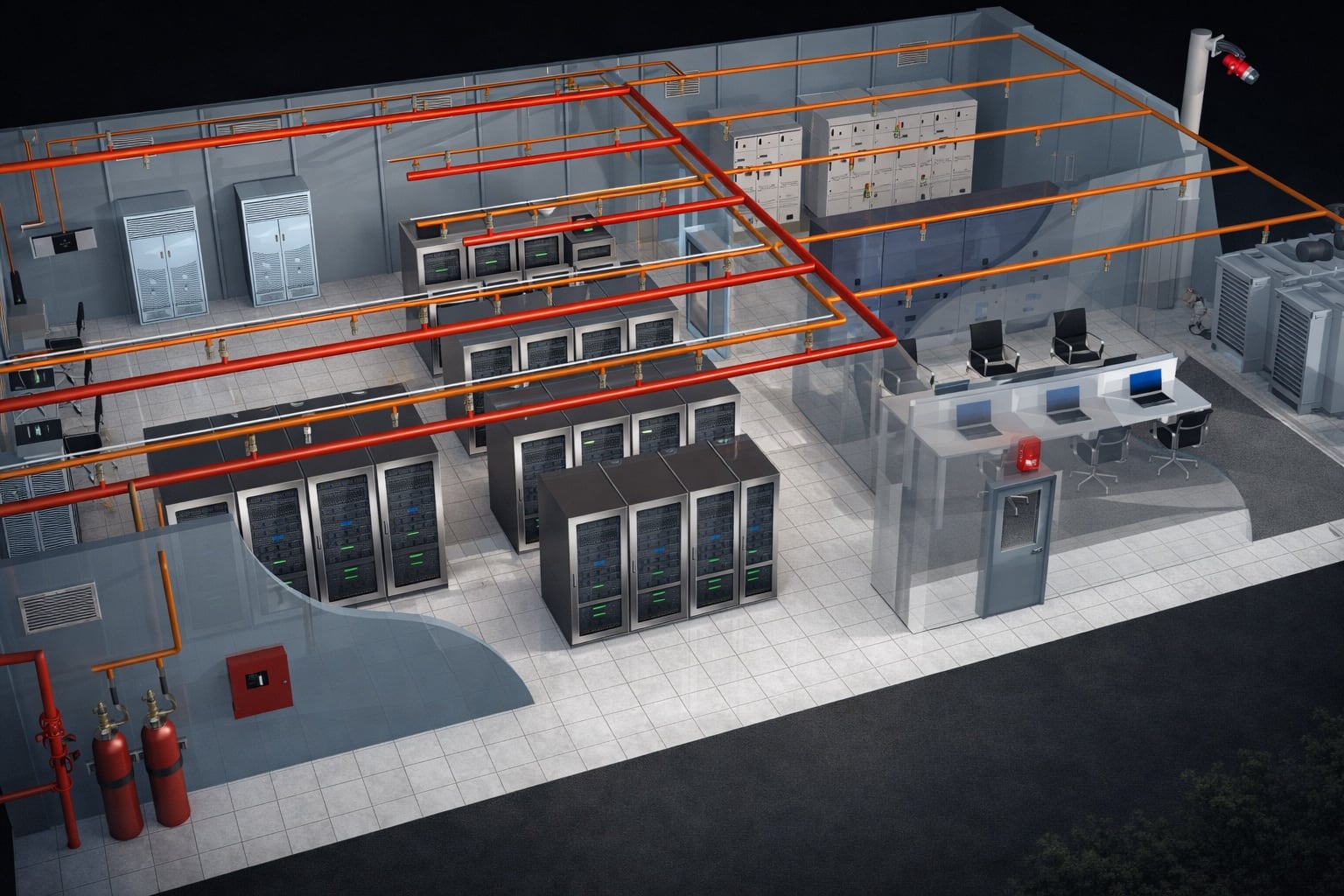
Signal-Processing Rooms (Core Telecom Equipment Areas)
Relevant Standards
- NFPA 76 emphasizes protection from fire and related thermal or smoke damage to equipment.
- Non-combustible construction and compartmentation are critical to limit fire spread.
Solutions:
- Fire Detection: Install very early warning fire detection systems (VESDA) for high-sensitivity monitoring of smoke and heat.
- Suppression: Use clean agent systems (e.g., NOVEC 1230, FM-200) to minimize the risk of damage to sensitive electronics.
- Seal cable penetrations and ducts to prevent entry of combustible gases or liquids into the room.
Power Rooms and Battery Backup Areas
Relevant Standards
NFPA 76 Chapter 4 requires risk evaluations based on continuity risks and fire hazards associated with these areas.
Solutions:
- Smoke and heat detectors in battery backup areas with redundancy systems to minimize downtime.
- Battery spill containment and ventilation systems to mitigate fire risks from overheating batteries.
Cable Entry Points
Relevant Standards
Large cables entering underground ducts must be protected from collecting combustible gases or liquids and directing them into the facility (NFPA 76 Section A.6.8.1).
Solutions:
- Seal all cable penetrations to block combustible material intrusion.
- Add exhaust fans or other ventilation systems to manage any buildup of hazardous substances.
Storage Areas for Fire-Resistant Equipment and Cables
Relevant Standards
NFPA 76 encourages reliance on fire-resistance-rated equipment and cable as part of the industry’s accepted safety practices.
Solutions:
Install automatic sprinklers designed for storage hazard levels as outlined in NFPA 13.
General Office Areas
Relevant Standards
These areas must meet standard business-type risk abatement measures as specified in NFPA 76 Section A.5.1.1 .
Solutions:
Install smoke and heat detection linked to the main fire alarm system.
HVAC and Smoke Control Systems
Relevant Standards
NFPA 76 recommends compartmentation and effective smoke ventilation in fire scenarios.
Solutions:
- Use pressurization systems to manage smoke spread.
- Install automatic smoke exhaust systems that activate upon fire detection.
External Generator
Relevant NFPA Standards
- NFPA 70 (NEC, 2026 Edition): Electrical safety standards, including wiring, grounding, and protection of generators.
- NFPA 101 (2024): Life Safety Code covering emergency systems and generator safety requirements.
- NFPA 110: Standards for emergency and standby power systems.
Solutions:
- Automatic Fire Suppression:
- NFPA 70, Articles 695 and 700: Install fire suppression systems in generator housings or enclosures, such as a wet-pipe or dry chemical suppression system for high-risk locations.
- For larger or higher-risk generators, clean-agent fire suppression systems (e.g., NOVEC 1230) can minimize damage to electrical systems.
- Smoke Detection:
- Smoke detectors should be installed inside generator enclosures and integrated into the facility’s fire alarm system to provide alerts during early ignition.
- Physical Barriers and Circuit Protection:
- Install circuit protection for generator control and power wiring. This includes:
- Fire-resistive cable systems as per UL 2196 or similar standards to withstand fire hazards.
- Encased wiring conduits in concrete for high-fire-resistance areas.
- Install circuit protection for generator control and power wiring. This includes:
Pre-fire Planning
Relevant Standards
NFPA 76 Annex E emphasizes prefire planning as critical to ensure smooth coordination between the telecom facility and emergency responders .
Solutions:
- Develop comprehensive fire response plans addressing depowering requirements and safe evacuation processes.
- Share updated facility layouts, fire alarm panel locations, and emergency contact lists with the local fire department.
The ORR Difference
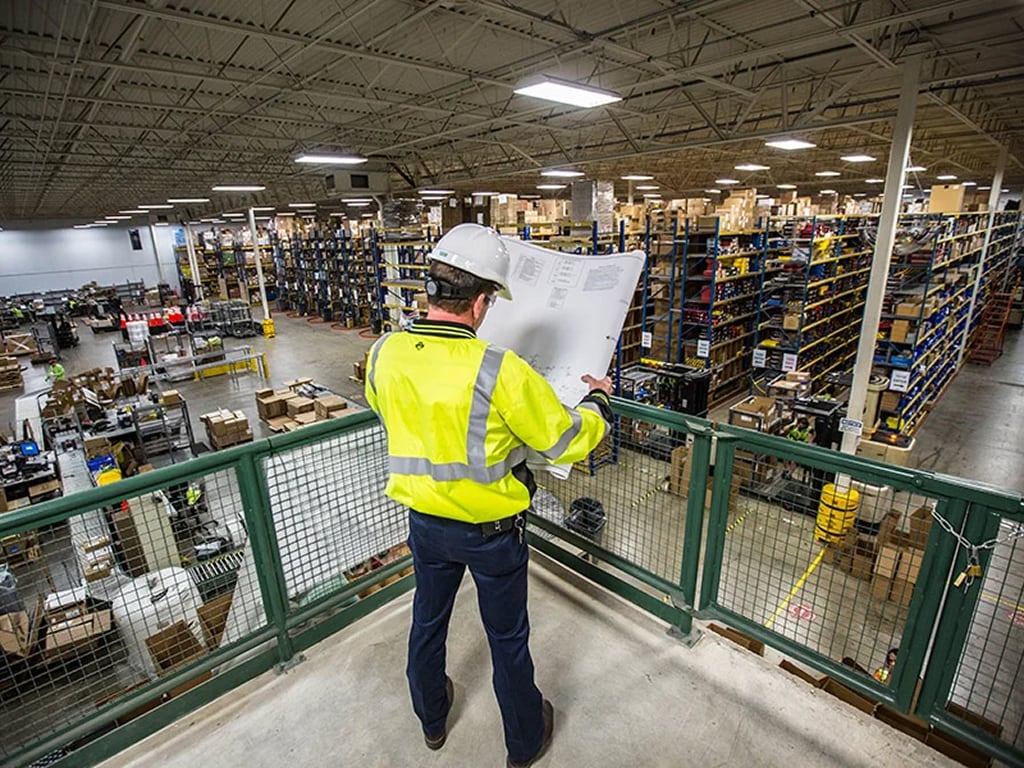
Discover what sets ORR apart. From industry-embedded experts and engineered system design to seamless installation, performance monitoring, and real-time remote oversight, our team delivers comprehensive fire protection support at every stage of your data center’s lifecycle.
Connected Communications Protection—Key Considerations
- Mission-Critical Uptime – Fire protection strategies are designed to prevent service interruption and maintain continuous operation across telecom and broadband networks.
- High-Risk Environments – Tightly packed, energized equipment, live cabling, and cooling demands significantly increase fire risk and potential impact.
- Unmanned & Remote Facilities – Many sites operate without on-site personnel, making early detection, automatic suppression, and remote monitoring critical.
- Irreplaceable Data & Services – A single fire event can disrupt communications for thousands of customers and permanently damage essential infrastructure.
- Beyond Code Minimums – Even when suppression is not required by the AHJ, advanced fire protection is often necessary to protect assets and operations.
- Designed for Network Diversity – Protection strategies apply across central offices, satellite transmission sites, cable head-ends, wireless facilities, and broadband infrastructure.
- Downtime Elimination Focus – Systems are engineered to detect, control, and suppress fires quickly—minimizing damage, recovery time, and operational impact.
ITM&M: Inspection, Testing, Maintenance & Monitoring
In connected communications environments, the effectiveness of fire protection systems is defined not at installation, but through continuous operational readiness. Over time, fire alarm devices drift, aspirating smoke detection sampling points foul, clean agent system components age, and network or power changes alter airflow and detection response characteristics. These conditions can quietly degrade system performance while facilities remain online.
Many telecommunications, broadband, and last-mile facilities operate unmanned or remotely, extending response times and increasing reliance on early detection and automatic suppression. In these environments, disciplined ITM&M is essential to ensure that aspirating smoke detection, clean agent suppression systems, releasing controls, and alarm signaling interfaces operate exactly as designed when needed.
Effective ITM&M supports ongoing alignment with NFPA 76 (Telecommunications Facilities), NFPA 72 (National Fire Alarm and Signaling Code), NFPA 2001 (Clean Agent Fire Extinguishing Systems), NFPA 25 (Inspection, Testing, and Maintenance), and applicable sections of the International Fire Code (IFC). Maintaining compliance with these standards—along with owner and carrier requirements—requires more than periodic inspections; it requires verification that systems remain functional between service intervals.
Remote monitoring platforms such as ProtectORR strengthen ITM&M programs by providing continuous visibility into alarm, supervisory, and trouble conditions. This allows abnormal system behavior to be identified and addressed early, supports faster response in unmanned facilities, and helps document operational compliance over the life of the system.
Effective ITM&M in connected communications facilities is not a compliance exercise—it is a business continuity strategy. Proper inspection, testing, maintenance, and monitoring ensure fire protection systems remain ready to perform, minimize service disruption, and protect the networks customers depend on every day.
Connect with our Connected Communications Team
-
 Dan JasperBusiness Development | Cable & Broadband – Cincinnati, OH
 -
 Rick ReynoldsExecutive Vice President, Business Development
 -
 Lee Kaiser, P.E.Vice President, Engineering & Training
Request a Consultation
[Request consultation Form]
ORR Protection needs the contact information you provide to us to contact you about our products and services. You may unsubscribe from these communications at anytime. For information on how to unsubscribe, as well as our privacy practices and commitment to protecting your privacy, check out our Privacy Policy.