Engineered Protection for Modern Manufacturing Facilities
Semiconductor fabrication, food processing, pharmaceutical plants—across today’s manufacturing environments, even a small fire can create a major loss. Beyond damage from heat and flame, smoke can contaminate products and machinery, while water used to fight the fire can shut down production, destroy materials, and trigger costly cleanup and delays.
ORR Protection delivers end-to-end fire and life safety solutions designed specifically for manufacturing operations where uptime, product integrity, and safety are non-negotiable. From clean manufacturing and controlled environments to high-throughput production lines, ORR supports facilities with engineered fire protection strategies that reduce risk, protect assets, and help maintain continuous operations.
Whether you manage facilities, oversee procurement, or support production and project execution, ORR provides a seamless solution package backed by deep in-house expertise, including:
- System engineering and design
- Code knowledge and compliance support
- Hazard mitigation analysis
- Emergency communications planning
- Emergency response plan development
Manufacturing Resources
The Manufacturing Protection Experience
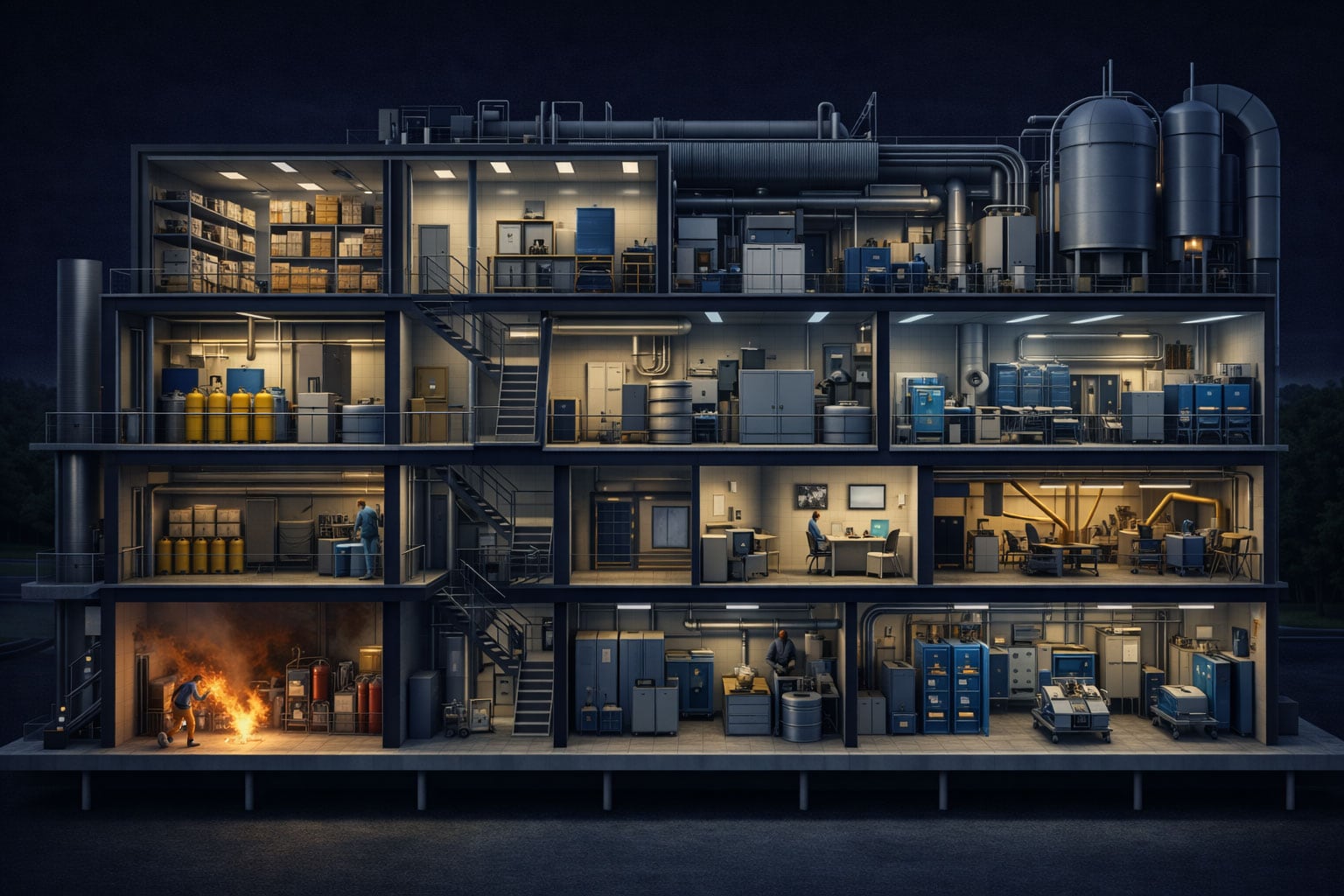
Storage Areas
Relevant Standards
Hazardous storage areas are exempt from smoke-resisting enclosure requirements if sprinklers are present (NFPA 101 Section 40.3.2.4) .
Solutions:
- Sprinklers: Design per storage hazard classifications (e.g., high-piled storage vs. standard occupancy).
- Flammable Liquids: NFPA 30 specifies foam systems or inert gas suppression for liquid storage zones.
- Ventilation: Systems to mitigate chemical vapor accumulation.
Chemical Handling and Hazardous Material Rooms
Relevant Standards
Protection per NFPA 101 Section 8.7.1.2 requires automatic extinguishing systems or smoke partitions for hazardous areas .
Solutions:
- Fire Suppression: Use dry chemical or clean agent suppression systems to prevent water-induced reactions.
- System Interconnections: Configure detection to initiate alarms and suppression simultaneously (NFPA 72).
- Flammable Limits: Adhere to containment and separation principles under NFPA 30.
Utility Rooms and Mechanical Spaces
Relevant Standards
NFPA 101 Section 40 notes fire detection and forced occupant egress may vary depending on hazard (e.g., electrical fires, boiler rooms) .
Solutions:
- Detection: Install heat detectors for early detection of fires caused by overheating equipment.
- Clean Agent Suppression: Use inert gas systems or FM-200 to protect mechanical equipment.
Office Spaces and Ancillary Areas
Relevant Standards
Admin and office spaces follow light hazard occupancy rules. Fire alarm systems are required if the facility exceeds certain occupant loads (NFPA 101 Section 40.3.4) .
Solutions:
- Sprinklers: Ceiling-mounted sprinklers designed for light hazard occupancies.
- Notification Systems: Audible alarms for evacuation.
- Detection: Smoke detectors installed near electrical panels, supply rooms, and office kitchens.
Areas Prone to Explosions
Relevant Standards
Explosion venting systems and suppression are required in areas with heightened risks (NFPA 68/69) .
Solutions:
- Explosion Venting: Install deflagration venting to safely discharge pressure.
- Suppression Systems: Use inert gas or chemical suppressant systems activated during emergencies.
- Notification: Link automatic suppression systems to the facility’s fire alarm for rapid response (NFPA 101 Section 40.3.2.3) .
Manufacturing and Production Areas
Relevant Standards
- NFPA 101 Section 40.3.2 requires protection against fire and explosion hazards to minimize risks to occupants during emergencies .
- Automatic sprinkler systems supervised by electrical monitoring required for hazardous areas (NFPA 101 Section 40.3.2.1).
Solutions:
- Sprinklers: Use wet or dry systems depending on the hazards (e.g., flammable material areas vs. general production).
- Detection: Heat and smoke detectors installed near equipment prone to overheating or ignition.
- Explosion Suppression: Install deflagration venting or suppression systems per NFPA 68 and NFPA 69.
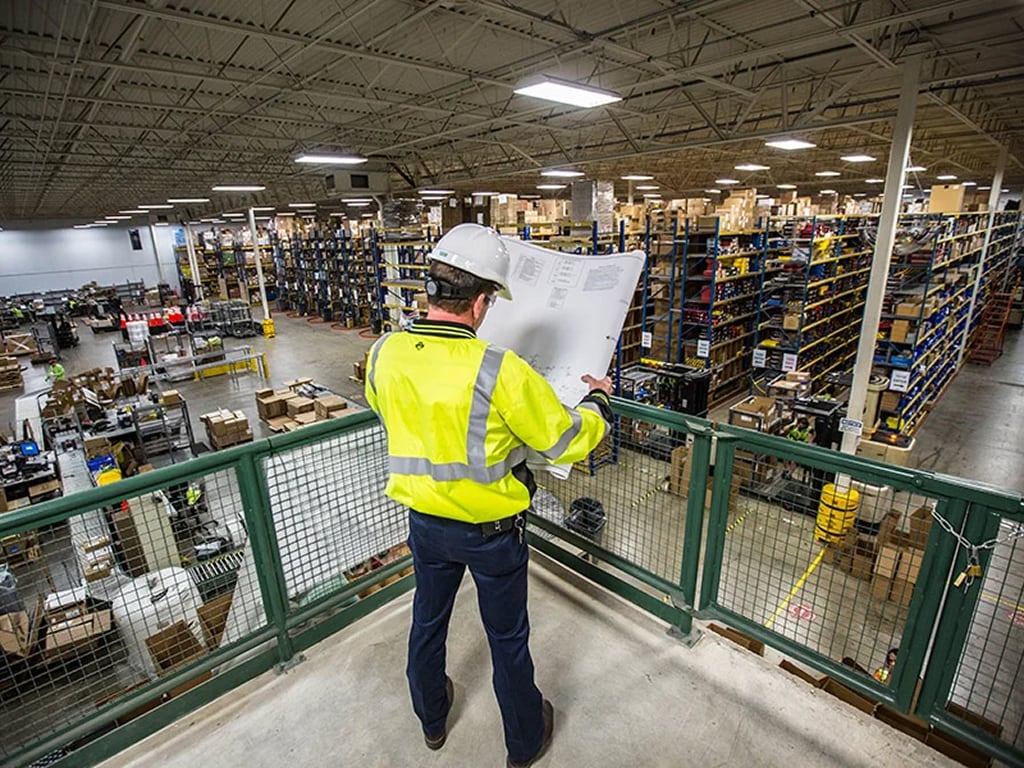
Protection for Production, People, and Uptime.
Manufacturing facilities present unique fire risks—and unique consequences. A fire doesn’t just damage equipment; it can contaminate products, interrupt production schedules, and create significant financial loss due to downtime, cleanup, and supply chain impact. In clean manufacturing environments, even minor smoke or water exposure can compromise an entire production run.
Here are some manufacturing environments we specialize in:
Customized Fire Protection for Manufacturing Operations
Manufacturing environments require fire protection strategies designed around real-world operations—where downtime is costly, contamination risk is high, and facility performance depends on reliable systems. ORR Protection delivers engineered fire and life safety solutions that help reduce risk, protect critical equipment and inventory, and support uninterrupted production.
From hazard assessments and code-driven system design to installation, inspections, maintenance, training, and 24/7 emergency response, ORR provides end-to-end protection for manufacturing facilities where safety and uptime matter most.
Connect with our Manufacturing Team
-
 Chuck HatfieldBusiness Development | Power Generation/Industrial – Atlanta, GA
 -
 Rick ReynoldsExecutive Vice President, Business Development
 -
 Lee Kaiser, P.E.Vice President, Engineering & Training
Request a Consultation
[Request consultation Form]
ORR Protection needs the contact information you provide to us to contact you about our products and services. You may unsubscribe from these communications at anytime. For information on how to unsubscribe, as well as our privacy practices and commitment to protecting your privacy, check out our Privacy Policy.