Customized Modular Solutions Built to Code
Technological advancements and evolving operational demands have redefined modular infrastructure. These critical facilities support highly sensitive, mission-critical operations and require sophisticated, high-performance, and fully code-compliant fire protection systems. Solutions must not only meet today’s regulatory and operational requirements, but also anticipate future scalability, deployment speed, and evolving risk profiles. ORR Protection delivers end-to-end life safety solutions that are custom-engineered to protect the most demanding modular environments—without compromising performance, compliance, or uptime.
We understand the pace, precision, and complexity required to execute modular projects successfully. ORR combines decades of fire protection expertise with nationwide reach and localized service teams, enabling rapid deployment and consistent execution across locations. Our approach delivers fast, flexible, and fully compliant fire protection solutions designed to safeguard your data, assets, and continuous operations—wherever modular infrastructure is deployed.
Mission Critical Modular Resources
The Modular Experience
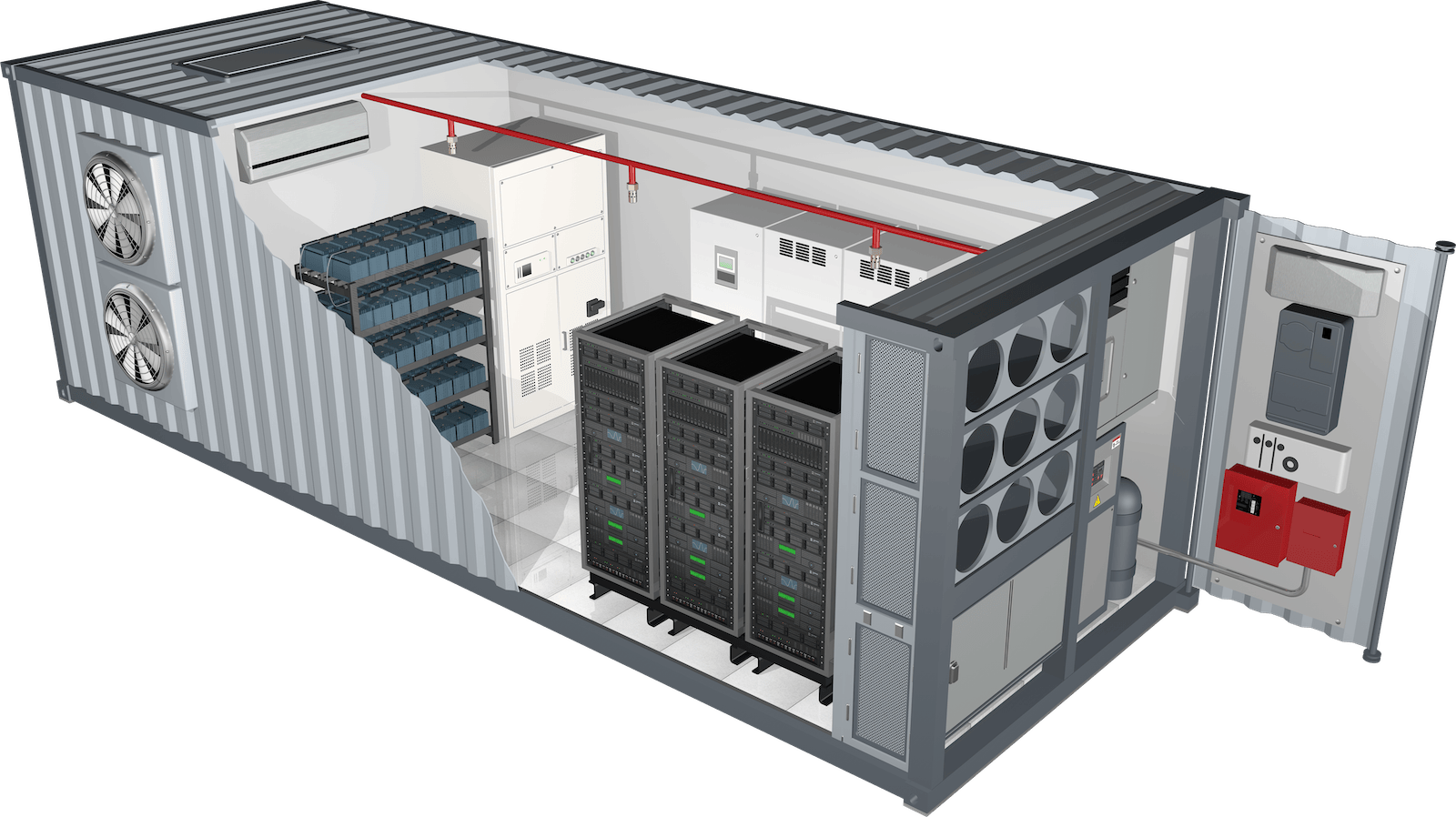
Deflagration Panels
Relevant Standards
NFPA 68 provides guidance on deflagration mitigation through vent panels designed to handle pressure surges in the event of explosion .
Solutions:
- Install deflagration panels and lightweight panels on the roof to safely vent pressure during an explosion.
- Use gas deflagration detection systems and exhaust interlocks to detect and mitigate explosive gas buildup .
HVAC Systems
Relevant Standards
- NFPA 72 Chapter 21 outlines HVAC system integration with fire alarm systems for smoke control, fan operation, damper control, and shutdown during fire incidents .
- NFPA 855 considers HVAC systems as part of clean agent suppression dispersal and for ventilation in confined spaces housing batteries .
Solutions:
- Equip HVAC systems with fire-controlled interlocks to shut down airflow during suppression events, preventing oxygen reintroduction.
- Monitor HVAC integrity for fire and smoke dampers using fire alarm systems integrated with supervisory controls.
Batter System
Relevant Standards
- NFPA 855 Annex C and G cover fire detection, suppression, and hazard mitigation for lithium-ion batteries .
- NFPA 70 National Electrical Code
Article 645.11 specifies requirements for UPS systems installed in information technology equipment rooms. UPS systems, their input, and output circuits must comply with prescribed standards, and disconnection must include provisions for batteries. See also UL 1778 and UL 62368-1 for correlation on product listings for UPS equipment and backup battery power (1).
Article 700.12(C)(4) provides details on the types of batteries suitable for emergency systems, like deep-cycle lead-acid batteries. It also refers to Article 480 for additional details on storage batteries (2). - NFPA 70B (Standard for Electrical Equipment Maintenance)
Chapter 25 focuses on UPS systems, including the requirement that UPS batteries be fully charged prior to performing system test conditions [citation:1, citation:4]. - NFPA 75 (Fire Protection of Information Technology Equipment)
Chapter 11 contains comprehensive rules on UPS battery systems. Section 11.5.2 includes provisions for batteries used in IT equipment UPS exceeding certain quantities, while 11.5.4 covers additional battery types (e.g., lithium-ion) and replacement conditions [citation:2, citation:3, citation:5, citation:6]. - Gas monitoring is critical for detecting flammable mixtures from thermal runaway or hydrogen buildup in valve-regulated lead-acid (VRLA) batteries .
Solutions:
- Aspirating smoke detection (ASD) systems placed near battery cabinets or ventilation outlets for real-time monitoring.
- Ventilation to remove flammable gases during suppression; seal compartments to minimize re-ignition risks.
- Clean agent suppression systems for battery modules to mitigate fires with minimal water damage risks.
- Thermal monitoring to detect early signs of overheating or temperature fluctuations in batteries.
Dry Pipe System
Relevant Standards:
- NFPA 855 (2026 Edition), which governs the installation of stationary energy storage systems.
- NFPA 13 defines requirements for dry pipe sprinkler systems in environments where freezing or water damage risks are high.
Solutions:
- Automatic Sprinkler Requirements
- Integrated fire alarm system
- Install a dry pipe system in the modular structure, ensuring rapid fire suppression capability without flooding sensitive equipment.
Supervisory Control, Aucution
Relevant Standards
NFPA 72 recommends control panels capable of integrating HVAC, fire alarm systems, and energy controls .
Solutions:
Provide a UL-listed fire alarm control workstation interfaced with all building systems (e.g., energy storage, ventilation fans, HVAC).
Use supervisory controls to manage deflagration system interlocks and ensure automated safety responses.
BMS
Relevant Standards
NFPA 855: Standard for the Installation of Stationary Energy Storage Systems (2026 Edition). The BMS is integral to the safety, optimization, and control of energy storage systems. Below are relevant details:
Solutions:
Annex G provides details on critical safety functions for BMS, such as:
High cell temperature trip.
Thermal runaway detection and system shutdown.
Isolation of battery racks during abnormal conditions.
Supervisory control of charging/discharging capabilities (4), (5).
Fire Detection and Suppression:
While a BMS can monitor and mitigate thermal and electrical anomalies, it might not detect fire directly. Fire detection should be incorporated separately into the energy storage installation ([citations:4], [citations:5]).
Predictive Analytics:
A BMS must have the capability to actively shut down or disconnect the system during fault conditions (7).
Ventilation Fans
Relevant Standards
- NFPA 855 Annex C suggests continuous ventilation within spaces housing batteries, ensuring removal of heat and gases .
- NFPA 68 advises ventilation as a method for handling explosion hazards in confined spaces
- NFPA 69-Standard on Explosion Prevention Systems.
Solutions:
- Use fans sufficient to maintain air changes, especially in spaces with lead-acid or lithium-ion batteries, avoiding combustible gas accumulation.
- Connect fans to the fire alarm system to enable automatic shutoff or exhaust activation during suppression events.
UPS Batteries
Relevant Standards
NFPA 855 Annex C and G cover fire detection, suppression, and hazard mitigation for lithium-ion batteries .
NFPA 70 National Electrical Code
Article 645.11 specifies requirements for UPS systems installed in information technology equipment rooms. UPS systems, their input, and output circuits must comply with prescribed standards, and disconnection must include provisions for batteries. See also UL 1778 and UL 62368-1 for correlation on product listings for UPS equipment and backup battery power (1).
Article 700.12(C)(4) provides details on the types of batteries suitable for emergency systems, like deep-cycle lead-acid batteries. It also refers to Article 480 for additional details on storage batteries (2).
NFPA 70B (Standard for Electrical Equipment Maintenance)
Chapter 25 focuses on UPS systems, including the requirement that UPS batteries be fully charged prior to performing system test conditions [citation:1, citation:4].
NFPA 75 (Fire Protection of Information Technology Equipment)
Chapter 11 contains comprehensive rules on UPS battery systems. Section 11.5.2 includes provisions for batteries used in IT equipment UPS exceeding certain quantities, while 11.5.4 covers additional battery types (e.g., lithium-ion) and replacement conditions [citation:2, citation:3, citation:5, citation:6].
Gas monitoring is critical for detecting flammable mixtures from thermal runaway or hydrogen buildup in valve-regulated lead-acid (VRLA) batteries .
Solutions
- Aspirating smoke detection (ASD) systems placed near battery cabinets or ventilation outlets for real-time monitoring.
- Ventilation to remove flammable gases during suppression; seal compartments to minimize re-ignition risks.
- Clean agent suppression systems for battery modules to mitigate fires with minimal water damage risks.
- Thermal monitoring to detect early signs of overheating or temperature fluctuations in batteries.
Lithium Batteries
- Aspirating smoke detection (ASD) systems placed near battery cabinets or ventilation outlets for real-time monitoring.
- Ventilation to remove flammable gases during suppression; seal compartments to minimize re-ignition risks.
- Clean agent suppression systems for battery modules to mitigate fires with minimal water damage risks.
- Thermal monitoring to detect early signs of overheating or temperature fluctuations in batteries.
The ORR Experience
Discover what sets ORR apart in these evolving applications.
Your Modular Application, Fully Protected
From edge computing to critical grid infrastructure, ORR Protection has you covered:
- Data Center Containers
- Telecom shelters and fiber huts
- Battery Energy Storage Systems (BESS)
- Power control modules and UPS cabinets
- Portable command centers and emergency units
- Industrial storage and petrochemical containers
- Public utility, transportation, and railroad shelters
Connect with our Modular Team
-
 Dan JasperBusiness Development | Cable & Broadband – Cincinnati, OH
 -
 Rick ReynoldsExecutive Vice President, Business Development
 -
 Lee Kaiser, P.E.Vice President, Engineering & Training
Request a Consultation
[Request consultation Form]
ORR Protection needs the contact information you provide to us to contact you about our products and services. You may unsubscribe from these communications at anytime. For information on how to unsubscribe, as well as our privacy practices and commitment to protecting your privacy, check out our Privacy Policy.